
Gutter Installation in Bella Vista, AR
Gutter installation in Bella Vista usually starts with the same question: why does the water come over the front edge in the same spot every time it rains hard?
When the water starts finding the foundation instead of the downspout
A gutter's job is to route water off the roof and away from the house, and when it can't keep up, the water finds its own path instead, usually right down the siding or into the ground next to the foundation.
The same wooded terrain that shades a lot of Bella Vista also drops a steady load of leaves and debris into every gutter run in town, and Benton County's rain doesn't come gently; it arrives in the same storm systems that show up on the hail and wind record.
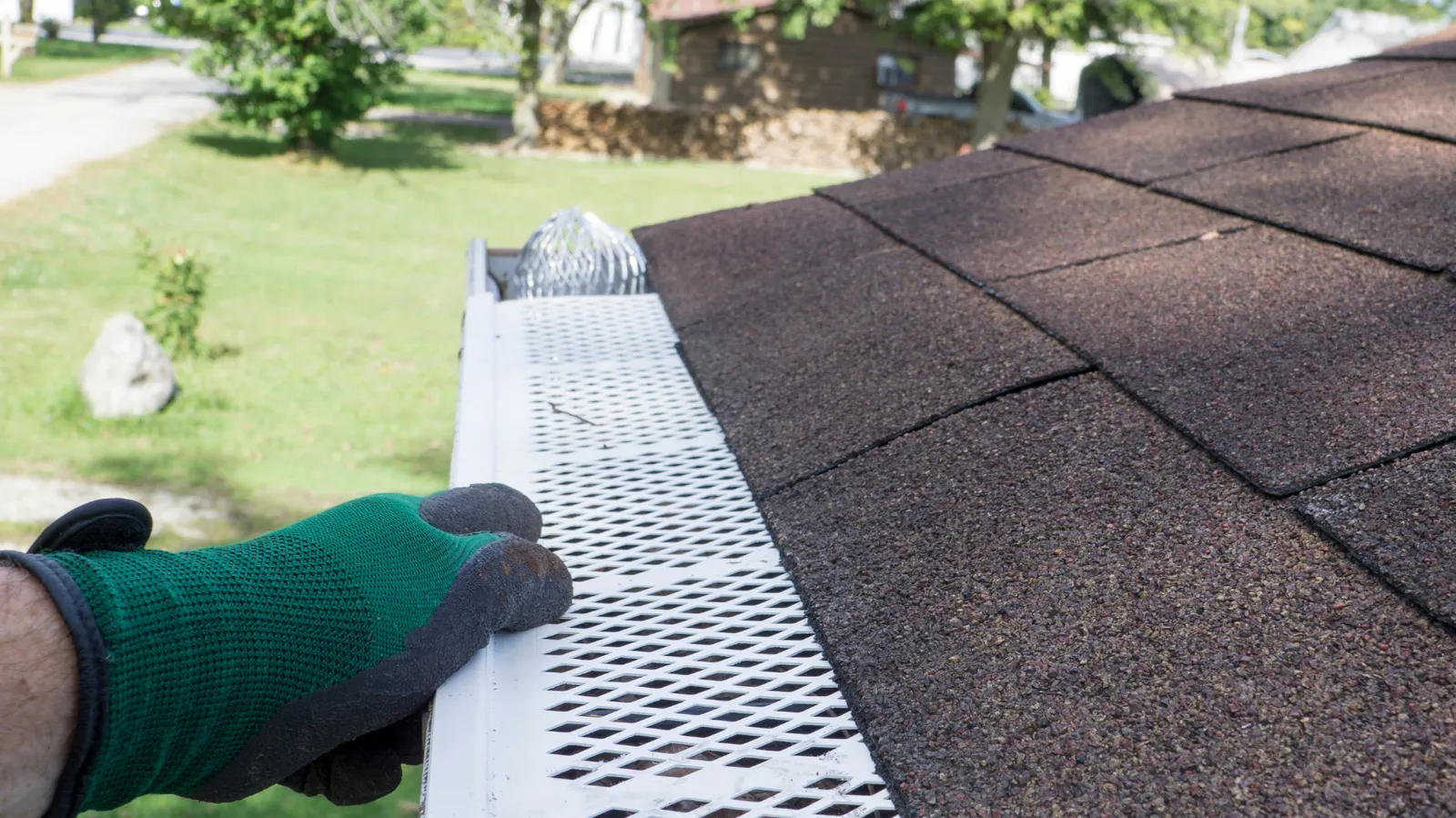
Sizing, hangers, and where the water goes
What goes into a gutter job, beyond hanging a trough. Getting the pitch and hanger spacing right up front is what keeps a system from needing another look after the first hard rain.
- 01Gutter sized to the roof
- A 5-inch or 6-inch profile is chosen against how much roof area drains into that run, instead of picked as a default. Undersizing is the single most common reason a gutter overflows on an otherwise sound roof.
- 02Hangers set to hold load
- Hidden hangers get spaced close enough to carry a full trough of water and debris without sagging between them. A gutter pulling away from the fascia usually started with hangers spaced too far apart.
- 03Pitch toward the outlet
- Every run is set with a slight slope toward its downspout, with no dead-level stretches, so water moves instead of sitting and finding the first low spot. A flat stretch is where standing water starts.
- 04Downspouts placed to work
- Outlets go where the roof sheds the most water, matched to that specific roofline instead of assumed from a standard corner. Downspouts then carry it a real distance away from the foundation, well past where runoff would simply re-pool against the wall.
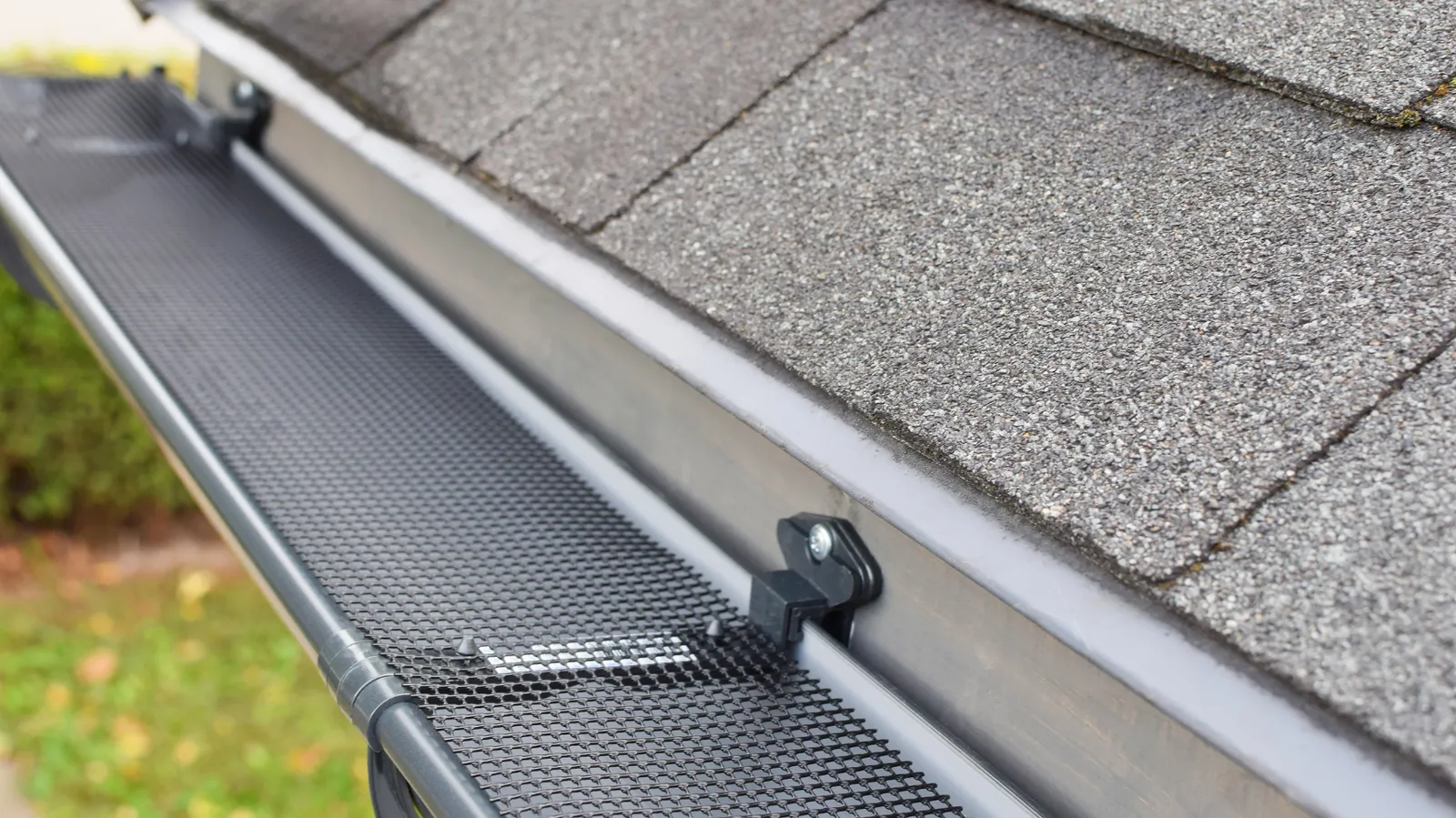
How much water this particular roof sheds is what gives those numbers meaning. That's next.
What gets checked before a single hanger goes up
Every run is sized against the roof area it's carrying first; a gutter swapped one-for-one onto the old hangers inherits whatever was wrong with the old system. An overflowing gutter usually has a sizing problem behind it, and sizing is settled before a single hanger goes up.
Measure the run
The roof area feeding each gutter run gets measured, along with the existing fascia and roofline, before any material gets ordered.
Set hangers and pitch
Hangers go up spaced to the load this run will carry, sloped toward the outlet from the start rather than adjusted after the fact.
Tie in downspouts
Downspouts connect at the low point of each run and carry water a real distance from the foundation, closing out the job.
Gutters that overflow in a Bella Vista downpour
What to look for the next time it rains hard. Most of it shows up while the storm's still going, and on a lot shaded by mature trees, the clogged-run version tends to show itself before the undersized-run version does.
- Water sheeting over the front edge: the run is either clogged or too small for how much roof feeds into it.
- Staining down the siding: a streak below the gutter line usually means it's been overflowing at that spot for a while, and not just once.
- Gutter pulling away from the fascia: sagging hangers are a sign the run is carrying more weight than it was set to hold.
- Pooling at the foundation: water landing right at the base of the wall means the downspout isn't carrying it far enough away.
Show a roofer where it happens, and that's settled on the spot, usually during a roof inspection.
Bella Vista gutter pricing, by the foot
Gutters price out by the linear foot, but that number doesn't mean anything until the actual run length on this house is measured on site instead of estimated from the street.
Story count changes the job too, since a second-story run costs more to access and hang safely than a single-story one. And how much water the roof sheds, driven by its size and pitch, decides the profile size before a foot-price means anything at all.
Get a number for your roof- Actual linear footage of the run
- Single-story versus second-story access
- How much water the roof sheds
Why gutters work harder on a wooded Bella Vista lot
Bella Vista sits inside the Ozarks on ground described as oak and hickory forest, with valleys and creeks cutting through a lot of the town rather than flat open lawns.
That canopy sheds a steady load of leaves and debris into whatever gutter is underneath it, on top of whatever rain the season brings. It's a setting fact, not a scare tactic: a wooded lot asks more of a gutter system than a bare one does, which is part of why sizing and pitch matter here.
- 01Heavy canopy overhead
- A lot shaded by mature oak and hickory feeds more debris into a gutter run than an open lot does, season after season.
- 02Hilly, creek-cut ground
- On sloped terrain, water that overshoots a gutter has somewhere to go fast, which is part of why keeping it in the system matters here.
How often your own gutters need clearing is a different question, and it's answered in the FAQ below.
Gutter questions that come up here
Overflow usually comes down to one of two things: not enough capacity, or not enough cleaning. Both look identical mid-storm, and telling them apart takes knowing how much roof that gutter is carrying.
Q1Are gutter guards worth it?
Q2How often do gutters need clearing here?
Q3Can a sagging or leaking gutter be repaired instead of replaced?
Q4Does gutter work come with a warranty?
Point out where the Bella Vista gutters overflow
Say where it overflows and how bad it gets in a hard rain, and a local roofer will measure the run and price the fix from there. The visit leaves you with the run measured and a number for it, and nothing is ordered until you say go.