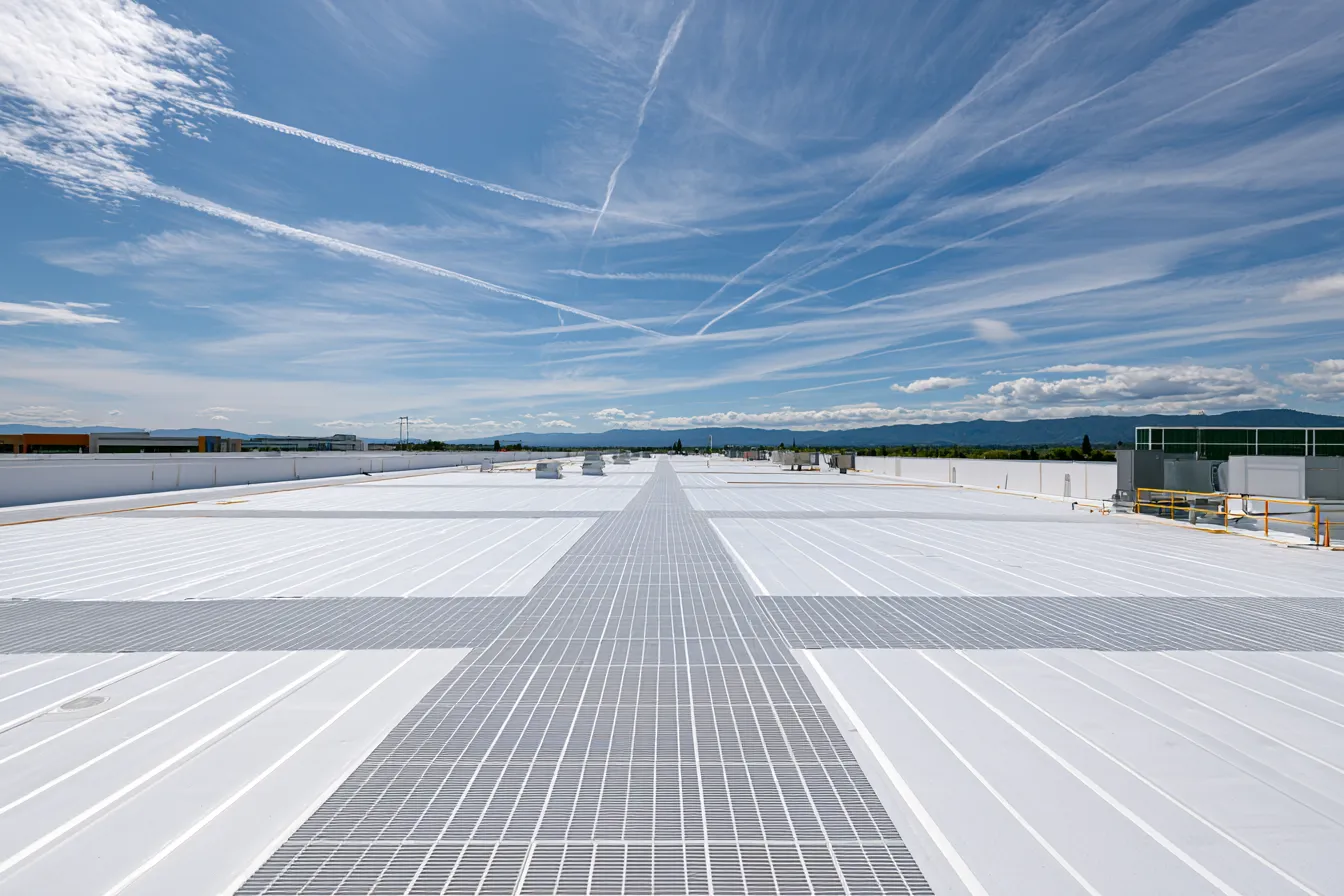
Commercial Roofing in Bella Vista, AR
Commercial roofs in Bella Vista come with what houses don't: units mounted on top, tenants underneath, and a low slope that drains differently. Describe the building and what is up there, and the walk gets scheduled around how it operates.
The membrane isn't the first decision.
Commercial roofing runs on different variables than a house does. The deck and the drainage decide the system long before the look of anything comes up.
That changes how the job is planned from the start. The system has to match what the deck can carry and what the drains can move, and the sequence has to work around a building that doesn't get to close for it.
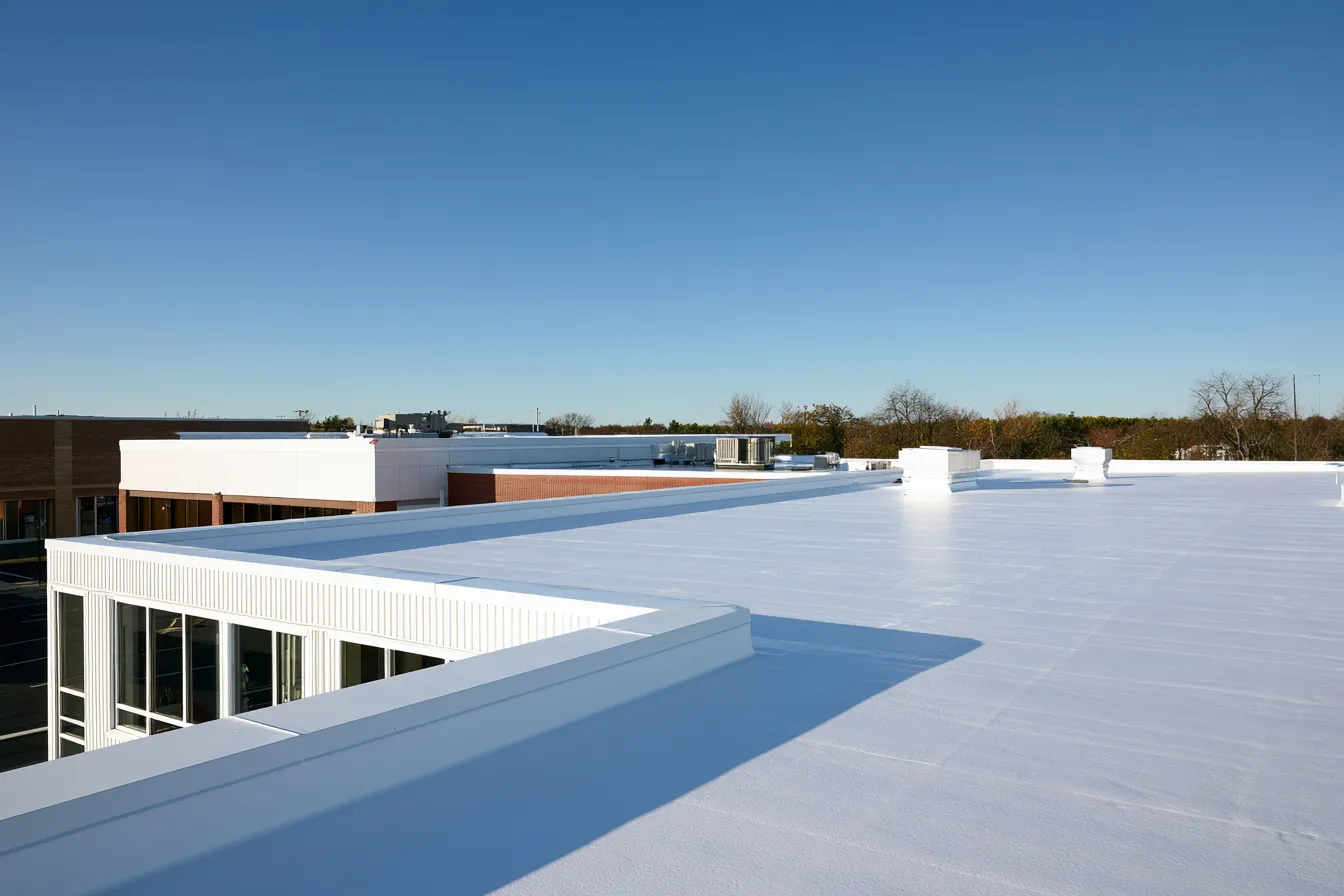
No single system wins on its own.
On a flat roof, hail and wind show up as drainage strain and seam stress long before they show up as a visible hole. The systems below differ mostly in how they handle exactly that.
TPO Membrane
A heat-welded, reflective sheet, the most common single-ply pick on flat commercial roofs today.
EPDM Membrane
A synthetic-rubber sheet with a long track record, most vulnerable at its seams.
PVC Membrane
Resists grease and chemical exposure, the right choice over a kitchen or industrial exhaust.
Modified Bitumen
An asphalt-based system built up in reinforced layers, tough on smaller low-slope roofs.
Standing-Seam Metal
Long-lived and steeper-pitched than most low-slope systems, with concealed fasteners that shed water fast.
Coating Systems
A fluid-applied layer over a roof that's still dry and sound, adding years without a full tear-off.
Every system here gets matched to your building on a walk instead of assigned off a list.
Low-slope systems and what each one needs
A commercial visit runs in the same order regardless of what system ends up going back on.
- 01Drainage Checked First
- A commercial visit starts at the drains and the low spots, because ponding water is what actually breaks a flat roof down over time. Slope, scuppers, and how fast water leaves the roof get looked at before any membrane talk starts.
- 02Deck And Insulation Tested
- What's underneath the membrane decides whether a roof can be coated and kept, or has to come off entirely. A roofer tests for trapped moisture before recommending either path, because coating over wet insulation just seals the water in.
- 03Seams And Flashing Traced
- Flat roofs fail at their joints, not their open field, so every seam and every flashing detail around a pipe, curb, or parapet gets checked in order. A single loose seam is usually the difference between a roof that holds and one that doesn't.
- 04Rooftop Penetrations Counted
- Every vent, HVAC curb, and drain is a hole in the roof that has to stay sealed, and more equipment means more places that need watching. A building with a busy rooftop gets a longer list and a longer visit.
- 05System Matched To The Building
- What goes back on gets matched to the drainage, the rooftop equipment, and whether the roof sees regular foot traffic. A kitchen exhaust or heavy equipment changes which membrane makes sense here.
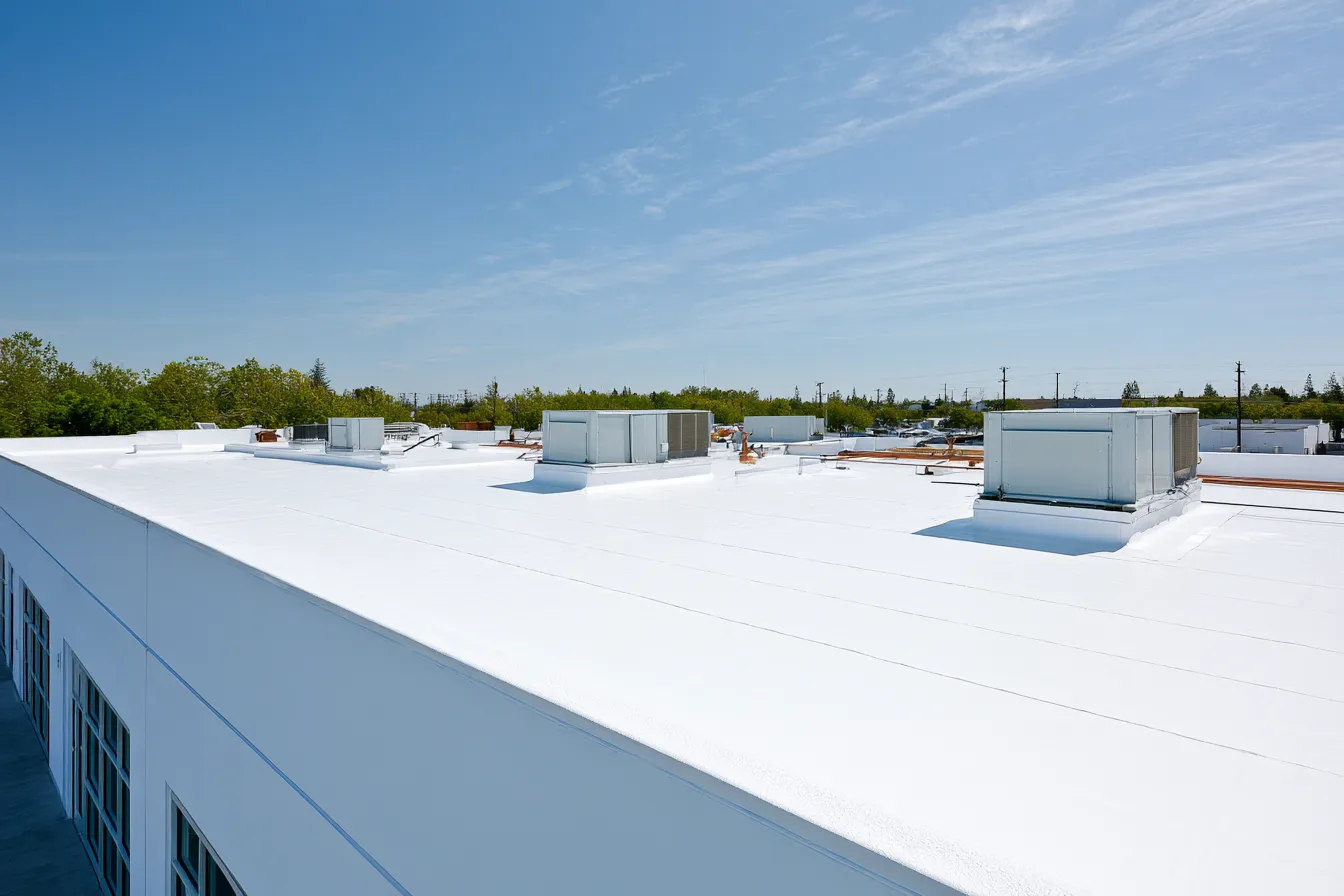
None of this is decided from a photo. It gets confirmed on the roof, before any system gets named, the same way a residential inspection works.
The building doesn't have to close for this.
A commercial re-roof moves section by section instead of all at once. Tenants, deliveries and rooftop equipment each set a limit on where the roofer's crew can be on a given day.
Walk And Test First
The roofer walks the roof, tests for trapped moisture, and confirms which system the deck and drainage call for before anything is priced.
Sequence Around Operations
Work gets staged in sections, with the noisiest or most disruptive parts planned around normal hours.
Close Out And Confirm
Drains, flashing, and the rooftop penetrations get checked once the system is down, and the warranty terms, the manufacturer's and the roofer's, get put in writing before the job is called finished.
Questions from Bella Vista building owners
The questions building owners bring before they commit to a system. Membrane type comes up late; access, equipment and timing come up first.
Q1Can the building stay open during a reroof?
Q2How does recover versus tear-off get decided?
Q3Does a commercial warranty cover storm damage?
Q4Who backs the warranty on a commercial roof?
Q5How does a system get chosen for a specific building?
Get the Bella Vista building looked at
Describe the roof, what's on it, and how the building's used, and a commercial roofer weighs the system against the deck and the drainage before naming one. The assessment carries no obligation, and what the roofer writes up stays with the building whether or not the work goes ahead.